



A rare meeting between academic research, technological innovation and industry





“TASE found a few characteristics of companies that prioritize distributing dividends over time. First, the company’s size: two-thirds of the companies that consistently distribute dividends are large companies (market cap exceeding ILS 1 billion as of the end of 2023). A possible explanation is that the size often reflects financial stability, which allows dividend distributions even during slower years.”

Photograph: envato
It pays to distribute dividends: Over the years many trends have emerged on the stock market: Real estate companies operating in developing countries, biomed companies, cannabis companies etc. However, in most cases what goes up fast also comes down fast, trends are temporary, and many investors get burned when joining just before the trend changes. On the other hand, a study recently conducted by the Tel Aviv Stock Exchange shows that over time companies that outperform do not belong to a specific trendy industry but rather are characterized by regular dividend distributions.
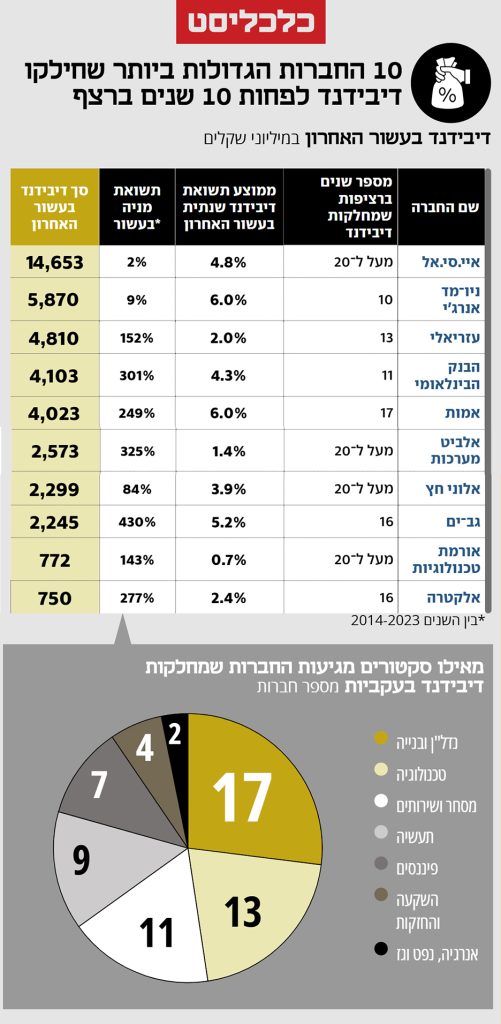
TASE decided to research for the first time ever what publicly traded companies have distributed dividends consistently over a long period of time, and what the characteristics of these companies are. The results of the research conducted by Yuval Tsuk show that 63 companies, which are 12% of the companies listed on TASE, distributed dividends consistently over at least ten years.
These companies significantly outperformed the market: the yield on equity of these companies over the last decade was 350% on average, compared to just 56% of the TA-125 index for the same period. 75% of the companies had triple-digit yields, and only seven shares (11% of the companies on the list) had returns lower than the TA-125 index. TASE provides a possible explanation for the outperformances, whereby “maintaining a continuous distribution of dividends over years is a positive signal with respect to the company’s resilience and its ability to maintain profitability, even if it is affected during periods of recession, economic downturn and various crises.”
Increase in dividend yield
As expected, the dividend yield of these companies is also higher than the market average, so that if the number of continuous years during which dividends are distributed increases, so does the dividend yield. While the dividend yield of companies on the TA-125 index is 2%-3% on average, among companies that have distributed dividends for ten consecutive years it reaches 4.2% per year on average. Among those that distributed dividends for 20 consecutive years, it reaches an annual average of 5.6%.
The data shows that 70% of the companies that consistently distribute dividends for more than a decade have a stated dividends policy of distributing a specific percentage of the profit, however 20% do not have such a policy, but nevertheless distributed dividends consistently (10% have a general policy for distributing dividends, and every year decide what the distribution rate will be). On the backdrop of the data, TASE is examining the creation of an index based on the study’s results. TASE currently has an index granting preference to companies that distribute dividends – the Tel Div Index, which failed to gather momentum. This index is based on companies with a dividend yield above 2%, but not on the consistency of distributions.
TASE found a number of characteristics of companies that prioritize distributing dividends over time. First, the company’s size: two-thirds of the companies that consistently distribute dividends are large companies (market cap above ILS 1 billion as of the end of 2023). A possible explanation is that the size often reflects financial stability, which allows dividend distribution even in slower years.
The other companies are small-to-medium sized with stable profitability and relatively low leverage. Some of them are veteran industrial or trading companies, such as Kafrit and Rimoni, which manufacture materials for the plastics industry; Birman, which manufactures wooden boards and metal fittings; and Brimag, which imports electronic devices. Some are holding companies, which customarily distribute dividends on the basis of their revenues from the investee companies, such as Fibi, the parent company of the First International Bank of Israel; Ram On, which holds Polyram; and Atreyu Capital Markets, which holds half of the investment house Yelin Lapidot. Similarly, most of the companies that distribute dividends consistently have a controlling shareholder. Among the companies without a controlling shareholder that nonetheless distributed dividends consistently we find two REIT funds (REIT 1 and Sella Capital Real Estate), which are required to distribute most of their profits as dividends every year.
Real estate at the forefront
By sector, 27% of the companies consistently distributing dividends are from the real estate sector, of which 70% are in the income-generating market. An additional prominent sector is technology: 21% of the companies that consistently distribute dividends are from the technology sector, while half are active in information technology services.
Among the banks, other than the First International Bank of Israel, and Bank of Jerusalem, no bank made the list, because banks are subject to capital adequacy restrictions (the ratio between equity and risk assets, primarily credit portfolios). During periods of economic crisis or slowdown, the Bank of Israel restricts dividend distributions at banks, so that they accrue surpluses capital to weather the period successfully, and therefore most of them do not distributed dividends consistently over a decade.
Smadar Barber-Tsadik (photograph: Tamar Matsafi)
The results of the examination show that of the 63 companies in question, 19 distributed dividend for at least 20 years, including Elbit Systems that is controlled by Mikey Federmann, which in the last decade distributed ILS 2.6 billion as dividends, and Ormat Technologies, which distributed ILS 772 million in a decade. It also includes ICL (formerly Israeli Chemicals) controlled by Idan Ofer, with a dividends policy of up to 50% of its profits, which in a decade distributed over ILS 14 billion in dividends.
ICL is one of the only companies that distributes dividends consistently but whose shares yielded below-market returns, where the company’s shares recorded an insignificant rise of 2% in a decade. This group also includes Delek Motors, controlled by the CEO Gil Agmon. Notwithstanding the consistent dividend distribution, the company has no dividends policy, and yet the company’s dividends yield is above average at 12.6% on average in the last decade.
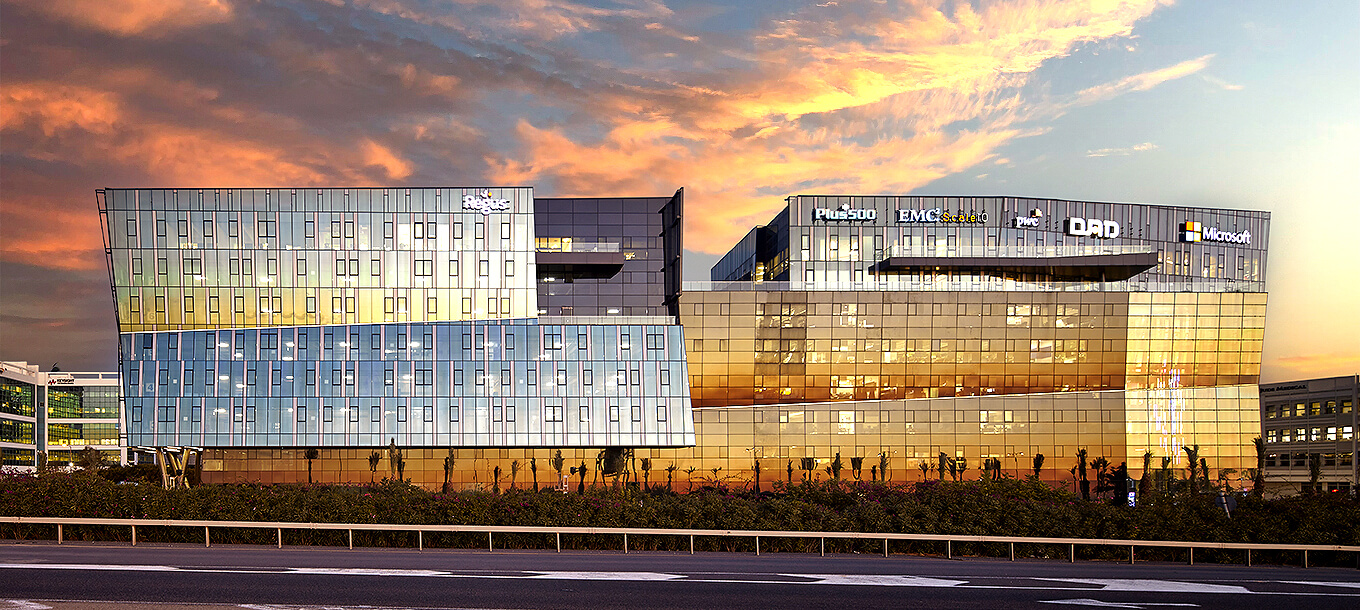
In Q2 the income-generating property company recorded an increase of 19% in net operating income (NOI) compared to the corresponding quarter, to ILS 193 million. The new contracts were executed with a real increase of 11% in rental fees
The real estate company Gav-Yam executed two lease agreements for a total area of around 8,000 sqm in the Gav-Yam Raanana project, which will generate revenues of approximately ILS 85 million
 To the article on the portal
  Share the article